




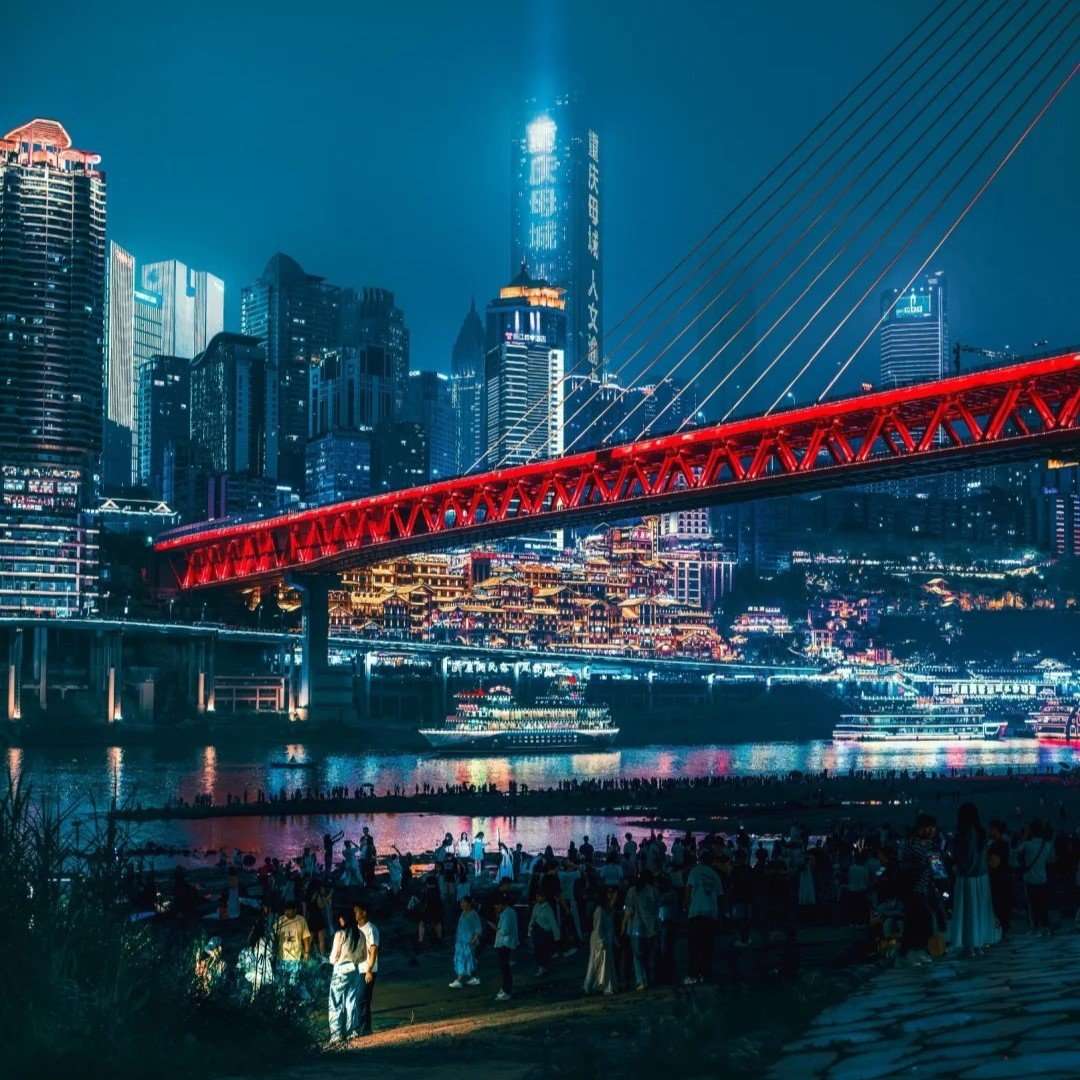
In the global urban landscape, Chongqing stands out as a uniquely layered metropolis. Its “cyberpunk vibe” is not merely neon on overpasses or a cinematic mimicry of Western films; it arises from a three-dimensional urban reality shaped by topography, complex transport systems, and a diverse social fabric. As artificial intelligence and robots increasingly enter public life, the futuristic character of this vertically stacked city intensifies, making you feel like you’re moving through scenes that switch between a real cyber-metropolis and a near-future society.
I. Topography Defines Space: A Three‑Dimensional City Like a Film Set
Chongqing’s mountainous terrain limits flat developable land. Transportation, housing, and commerce are continuously stacked—upwards, downwards, and inward. Subway lines cut through buildings; multi-level interchanges appear to sprout from the terrain; residential and commercial districts step down toward the river. This natural stacking creates a strong three-dimensional depth of field where people, vehicles, buildings, and water interweave.
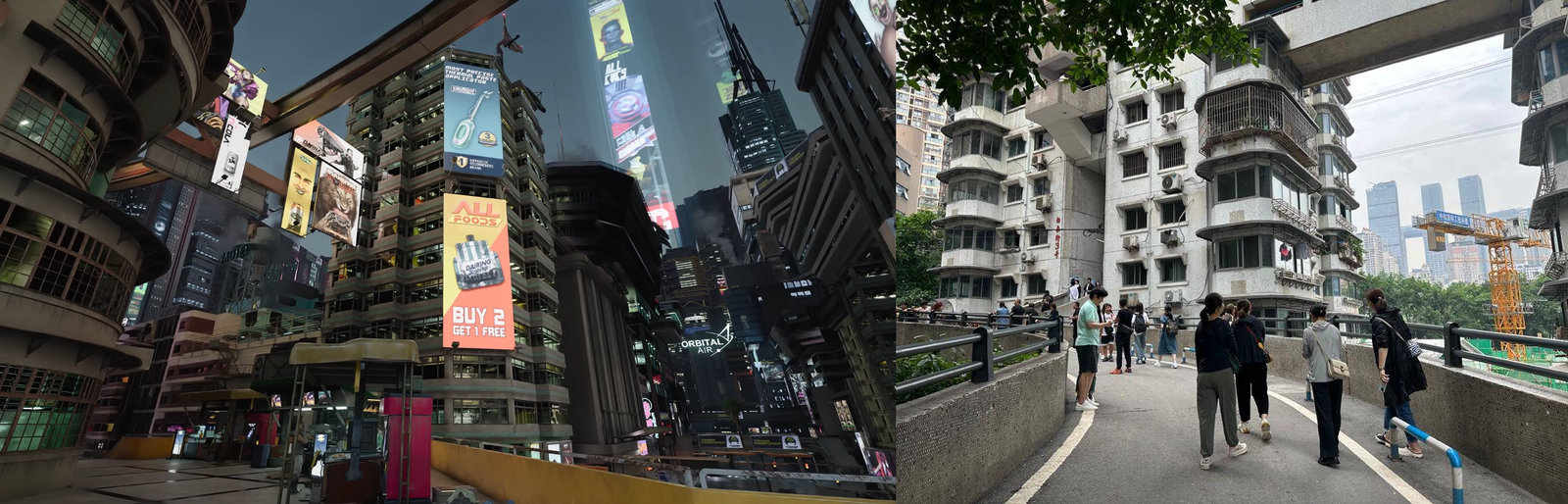
Infrastructure and daily life are tightly coupled, allowing Chongqing to feel like a “future movie set.” At Li Ziba (李子坝, Liziba), light rail trains pass directly by apartment windows, which has become an everyday spectacle. Elevated roads and overpasses, resembling spiderwebs, connect stratified urban arteries. Chongqing’s futurism is primarily structural—an “unnatural” geometry that residents normalize—bridging real urban life with fictional visions of the future.
II. AI and Robots Arrive: Practical Tech Upgrades the City’s Narrative
If the city’s built form created an implicit sci‑fi filter, AI and robotic deployments upgrade the narrative from visual to experiential. Across Chongqing, intelligent patrol robots, delivery robots, and AI reception systems have become common:
Major commercial areas—such as Jiefangbei (解放碑, Jiefangbei Pedestrian Street), Raffles City Chongqing (来福士重庆, Raffles City Chongqing), and Hongyadong (洪崖洞, Hongyadong)—now deploy intelligent security robots that patrol, answer questions, and interact with visitors.
In new residential and office complexes, delivery robots shuttle across sidewalks, overpasses, stairs, and elevators—solving the last 100 meters of contactless delivery in a vertically layered city.
Large malls and exhibition venues, including those at the Chongqing Smart Expo (重庆智博会, China International Smart Industry Expo), use AI reception kiosks and guide robots that provide multilingual information or personalized recommendations.
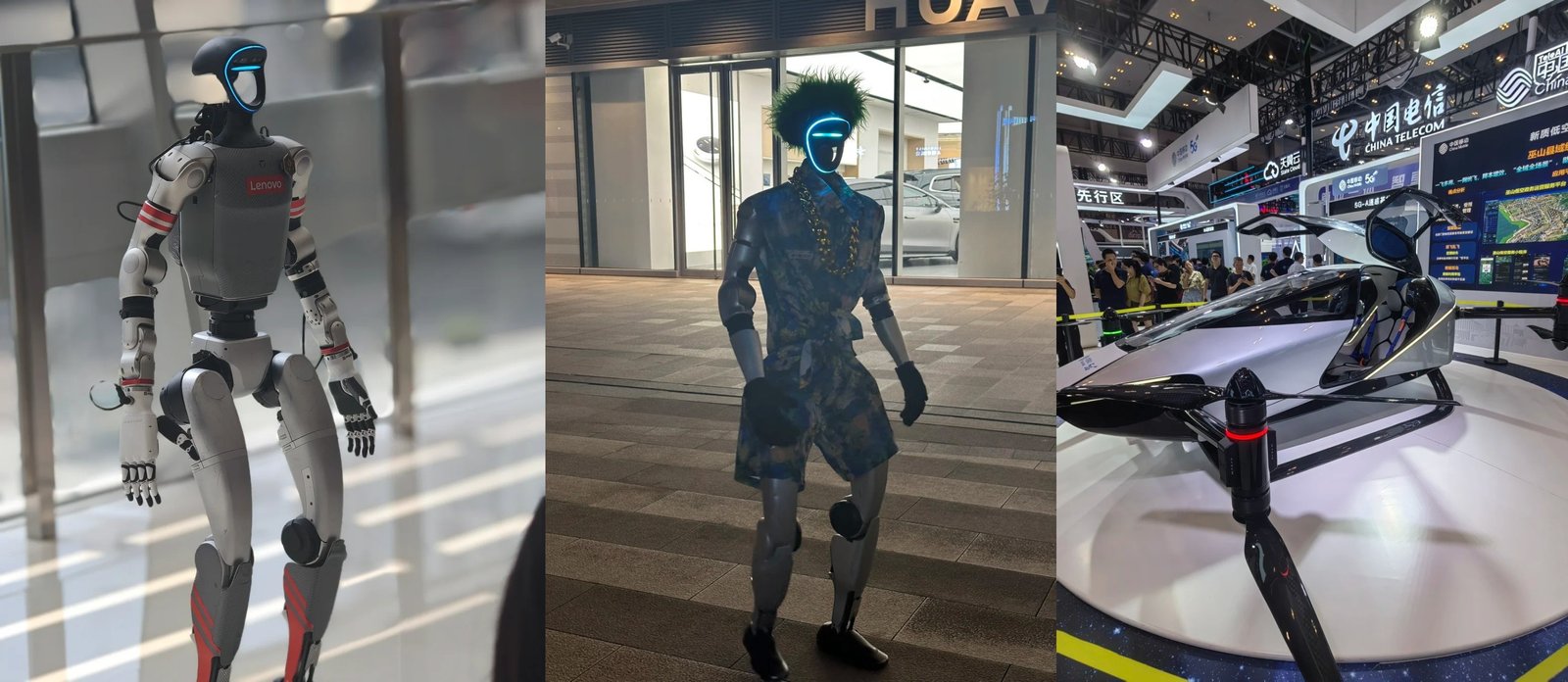
These machines don’t dominate the city like sci‑fi antagonists. Instead, they adapt to Chongqing’s verticality—waiting at crosswalks with pedestrians, squeezing past alley steps, even greeting street vendors—creating a humanized coexistence of technology and daily life.
III. The Physical Experience of Information Overload: Light, Sound, and Data
Chongqing’s cyberpunk aesthetic stems from stacked audiovisual layers. Dense advertising screens, flowing light patterns on multi‑story facades, reflections on the river, and frequent mist combine into cinematic nightscapes. Now AI systems are rewriting this “information landscape”:
Smart monitoring and guidance systems in places like Raffles City’s skybridge (来福士空中连廊), the Crystal skywalk, and Jiefangbei Square integrate image recognition, data analysis, and adaptive lighting.
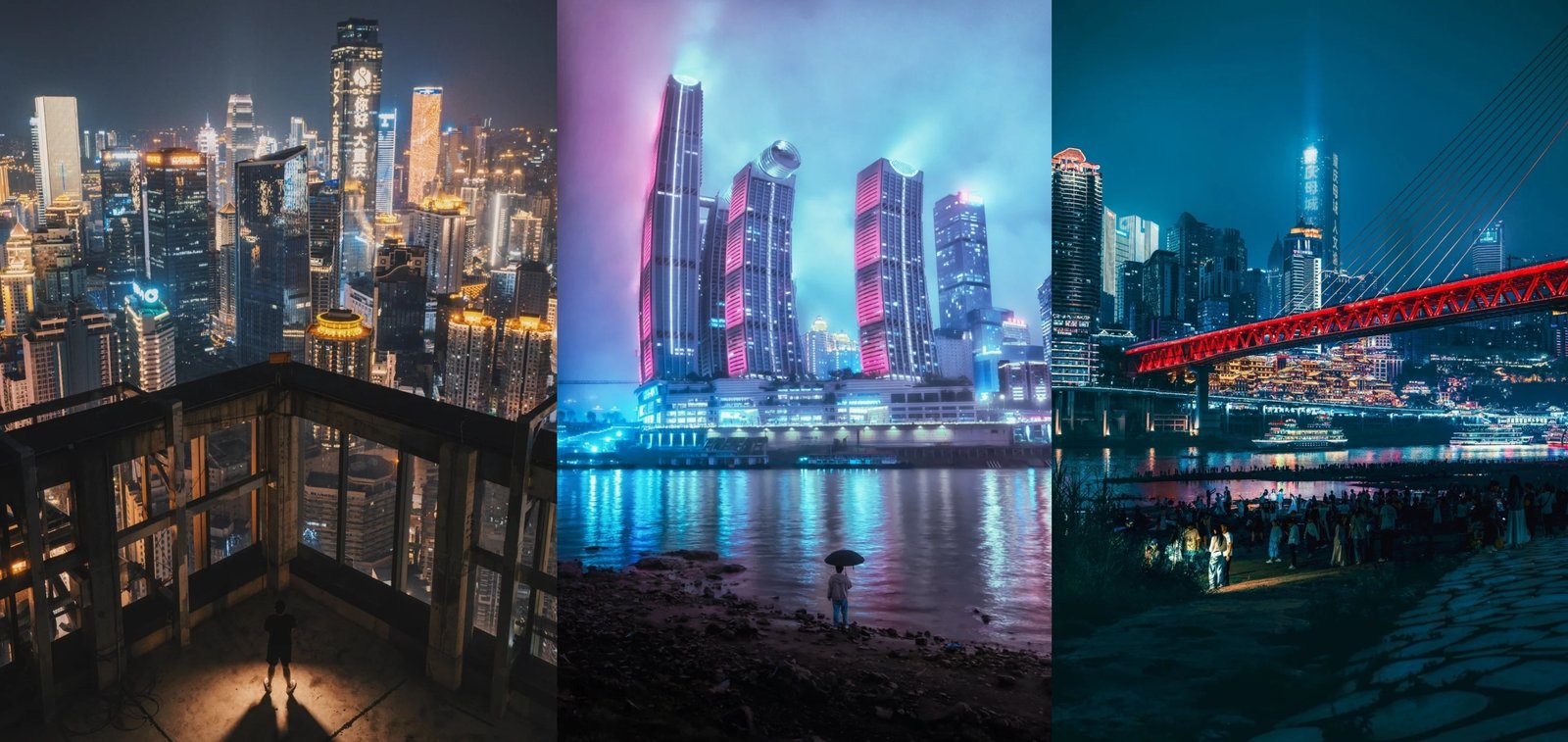
Traffic flows, rail operations, pedestrians, commerce, and large displays now interact in near real‑time, making encounters with an AI information kiosk feel like engaging with a dynamic urban portal rather than a static signboard.
IV. Collision of Old and New: Grounded Digital Life
Chongqing’s futurism hasn’t erased the everyday; it has layered it. In neighborhoods such as E’ling (鹅岭, E’ling / Eling), Shibati (十八梯, Shibati), and mountain‑city alleys (山城巷, Shancheng Alley), old stone steps sit beside vending machines and robot services. You might see a courier robot collecting a package beside an elderly woman selling latiao (辣条, a spicy snack), or a patrol robot exchanging familiar gestures with a stall vendor. There’s no sterile divide between humans and machines—just a pragmatic, symbiotic relationship shaped by spatial limits and daily needs.
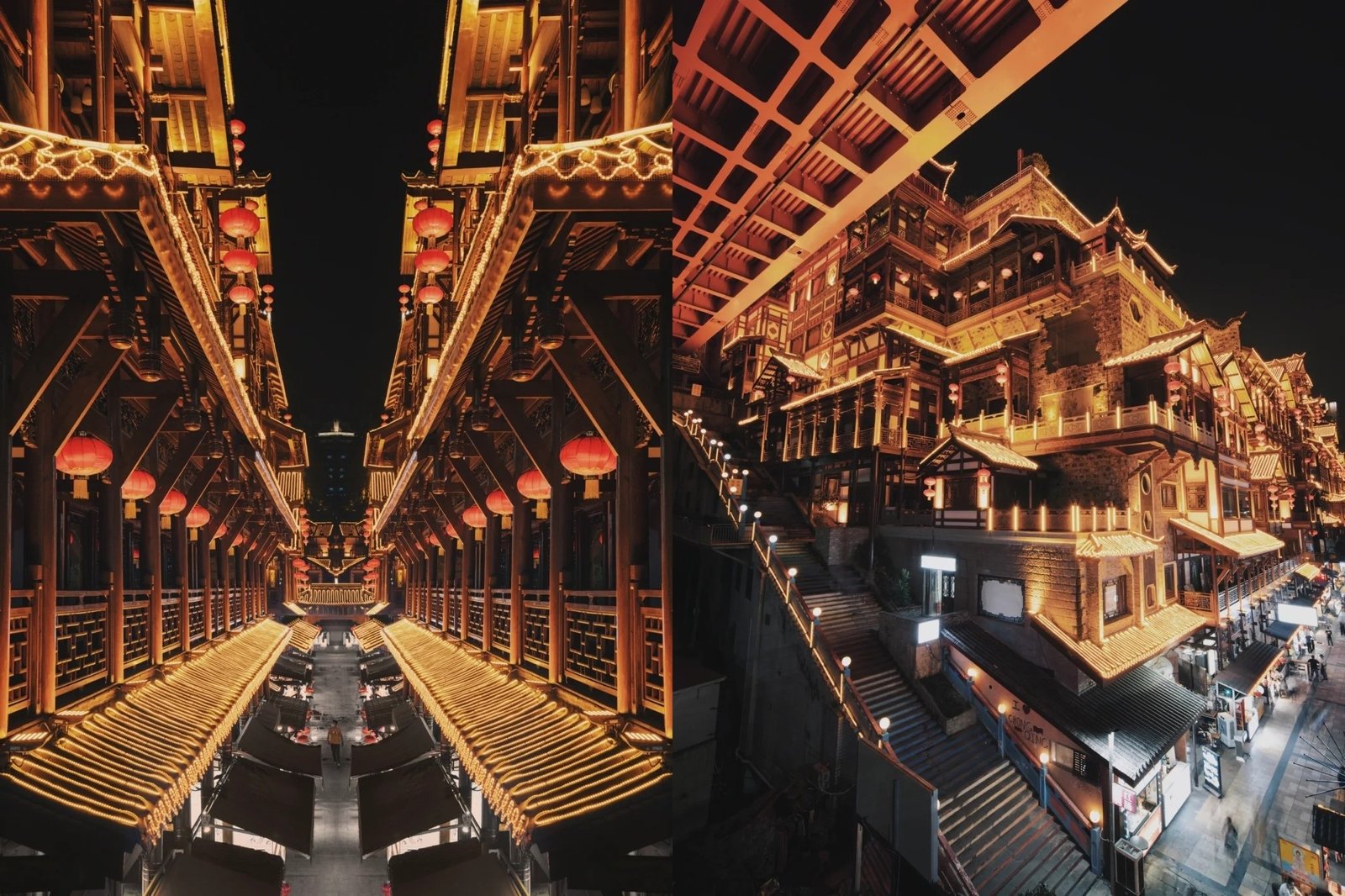
This blend of the mundane with high technology is a core element of real‑world cyberpunk: advanced tech embedded in ordinary, lived spaces, with massive infrastructure and everyday life reinforcing each other.
Chongqing as a Living Example of Cyberpunk Reality
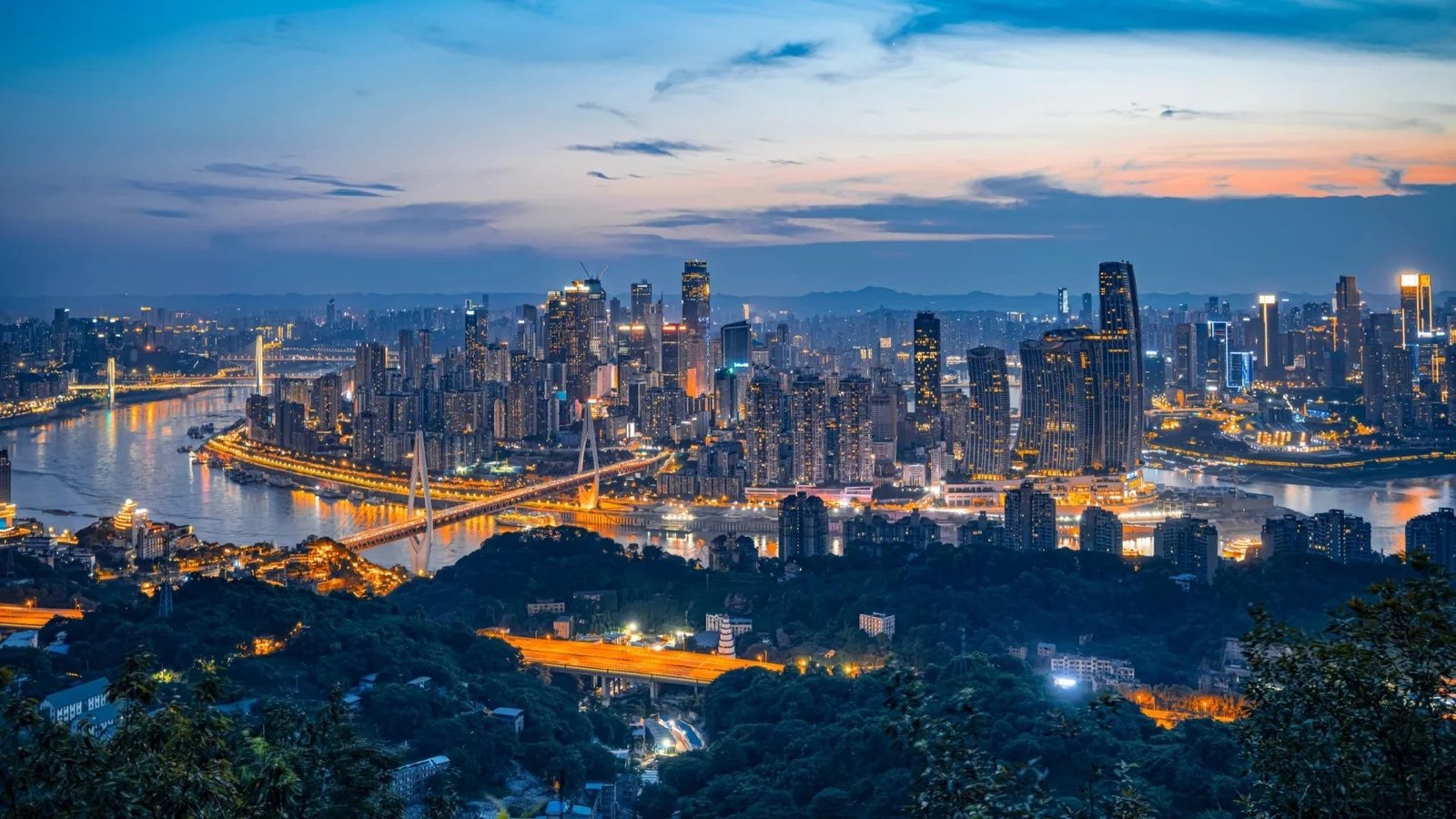
Chongqing’s cyberpunk character isn’t the result of deliberate stylization; it emerges from the city’s three‑dimensional structure, dense information environment, applied technologies, and grounded daily life. As AI and robots move beyond props to functional parts of urban life, Chongqing constructs a “future happening now.”
When you wait for a train that passes through a building at midnight near Jiefangbei, watching traffic cross a bridge and delivery robots weaving through street-level commerce, you may realize Chongqing isn’t just a film set for the future—it’s a bold, living experiment in urban space and social logic. Its cyberpunk is not imaginary luxury, but a tomorrow that people can step into and touch.